Closa · Nigeria · Fintech · Service design
Opening bank accounts for people the ID system couldn't confirm yet
When Nigeria's national identity database (NIMC) stopped synchronising reliably, a financial inclusion service was turning away two in three applicants. Most of them were unbanked people with only a National Identification Number (NIN).
I led the redesign of account opening across the app, USSD, text messages and local agents. Instead of a yes-or-no gate, the service now proves a person owns the ID they type, opens an account that can receive money straight away, and unlocks everything else once verification completes.
- My role
- Senior Service Designer · Design lead for onboarding
- Product
- Account opening for unbanked customers
- Channels
- Mobile app · USSD · SMS · Agent app
Drop-off fell from 65% to 12%
Share of people who started account opening and didn't finish, before and after the redesign.
4
channels designed as one service: app, USSD, SMS and agents
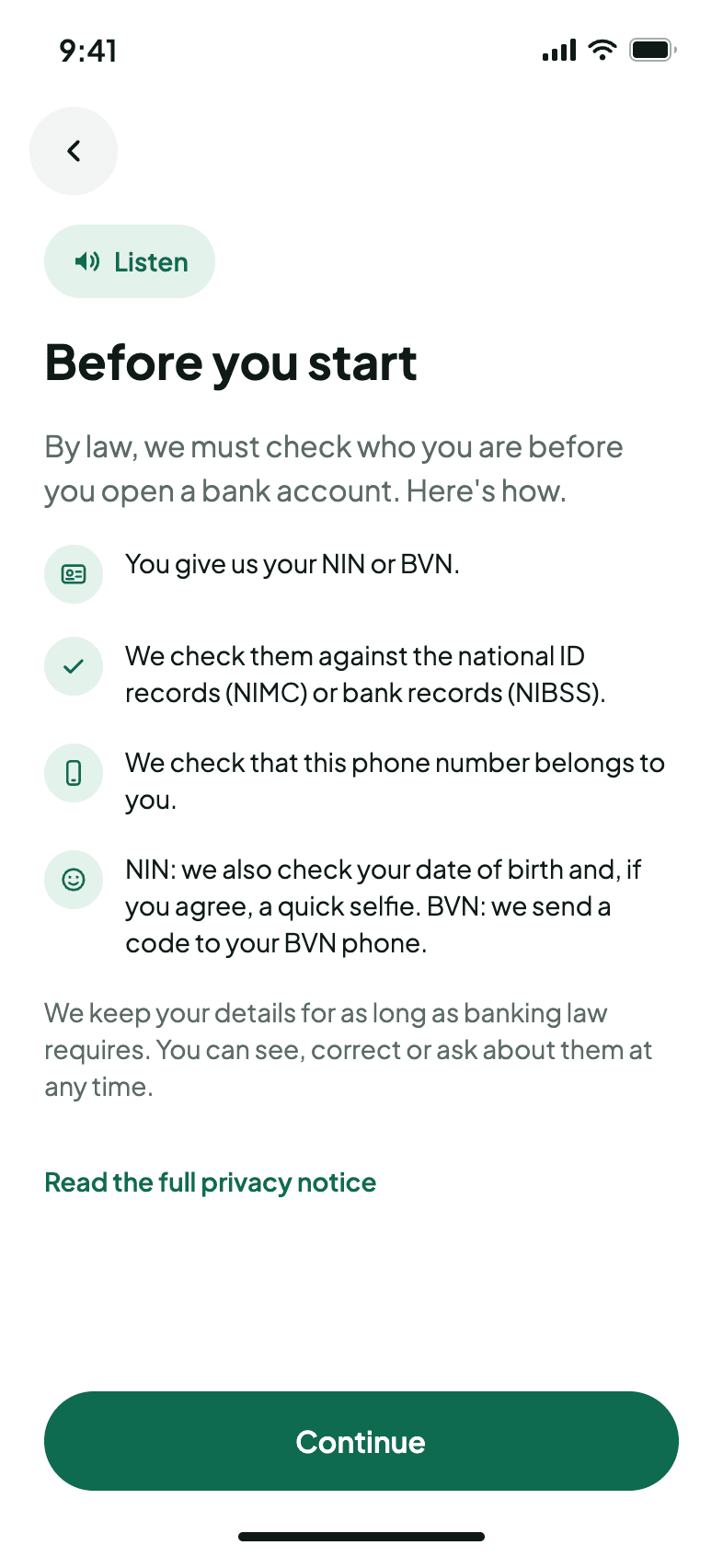
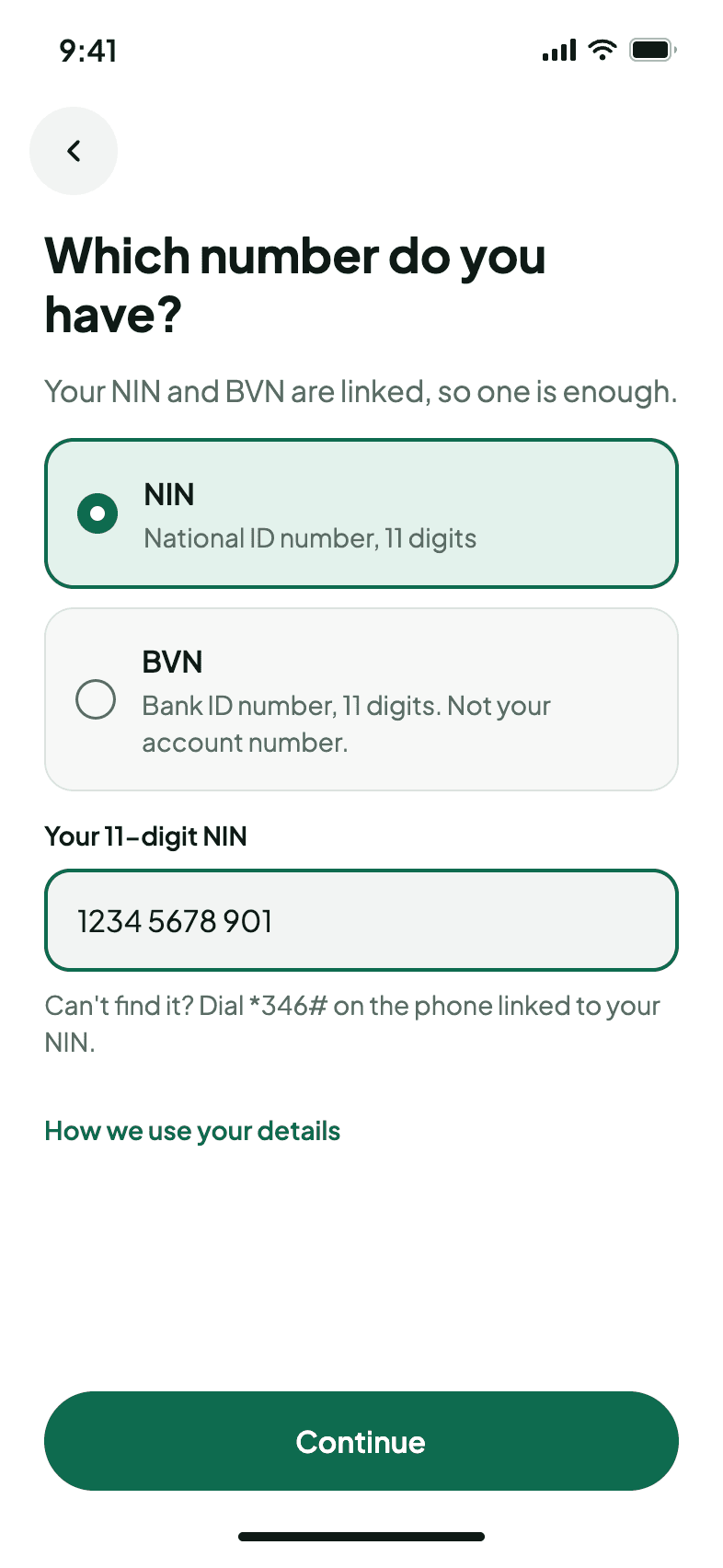
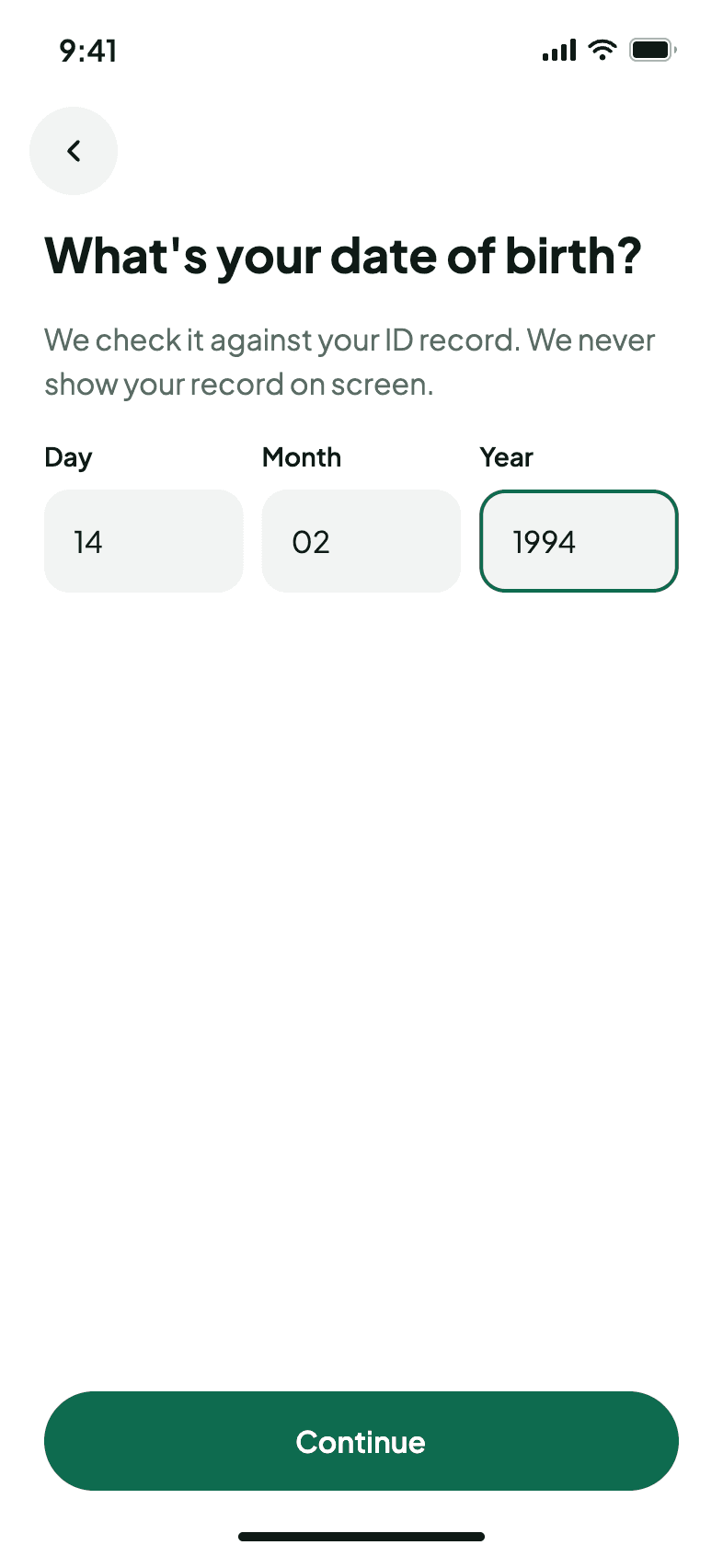
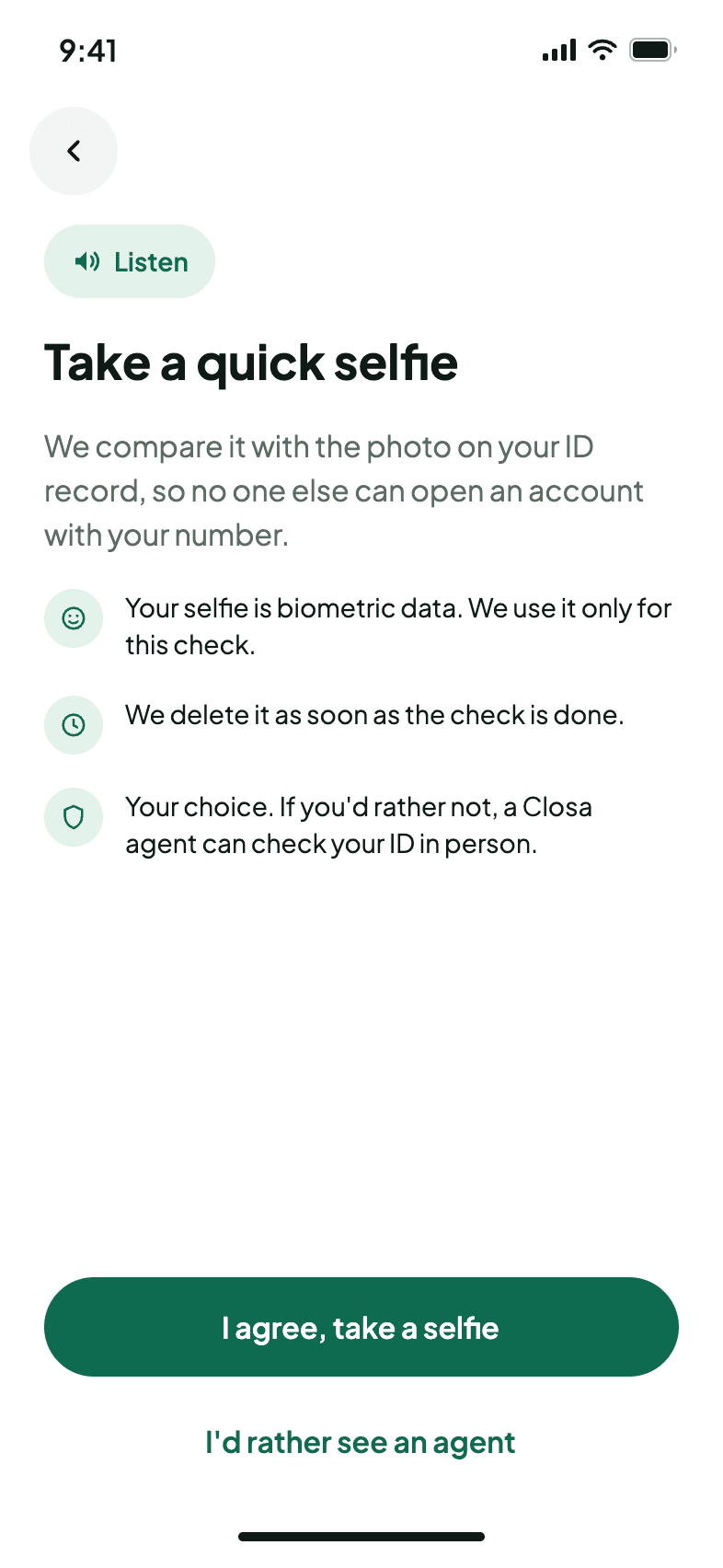
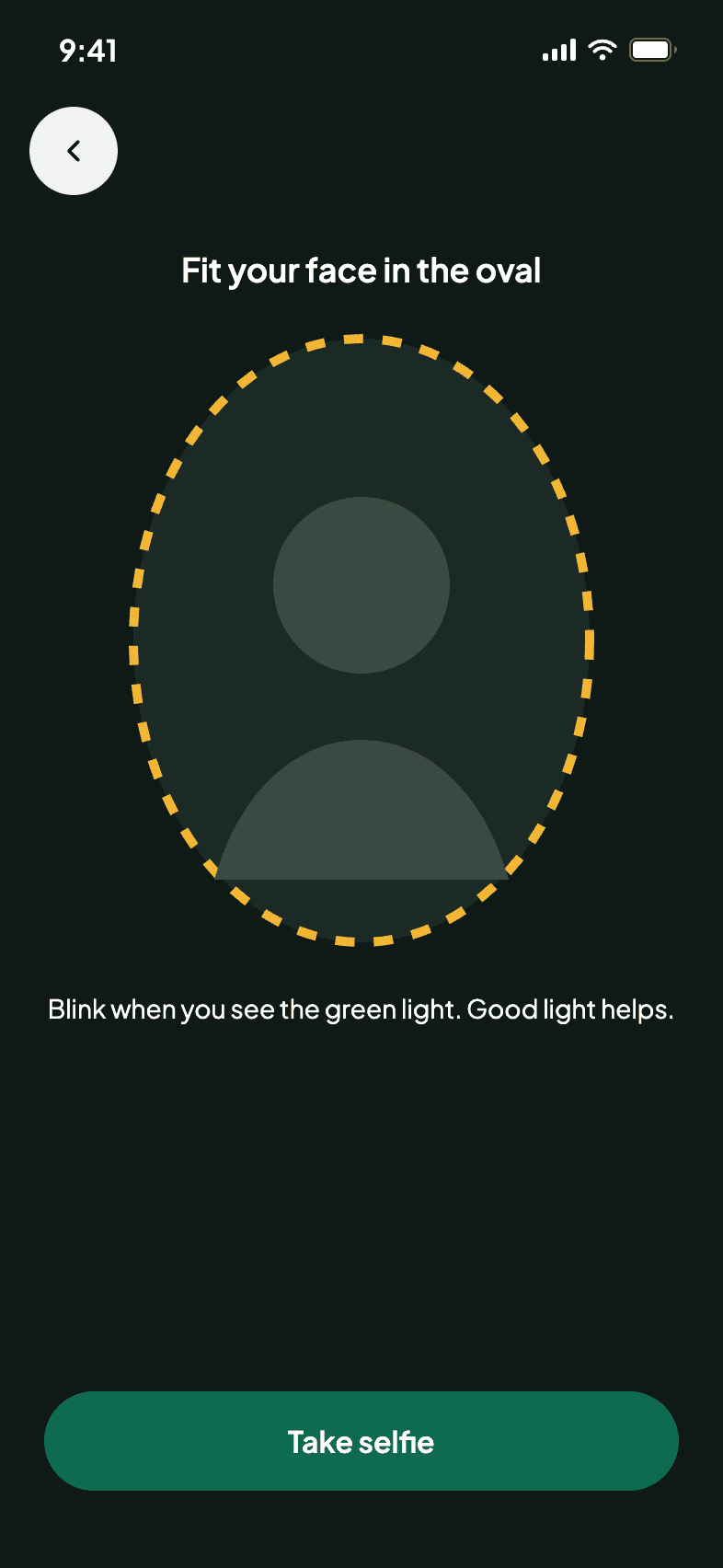
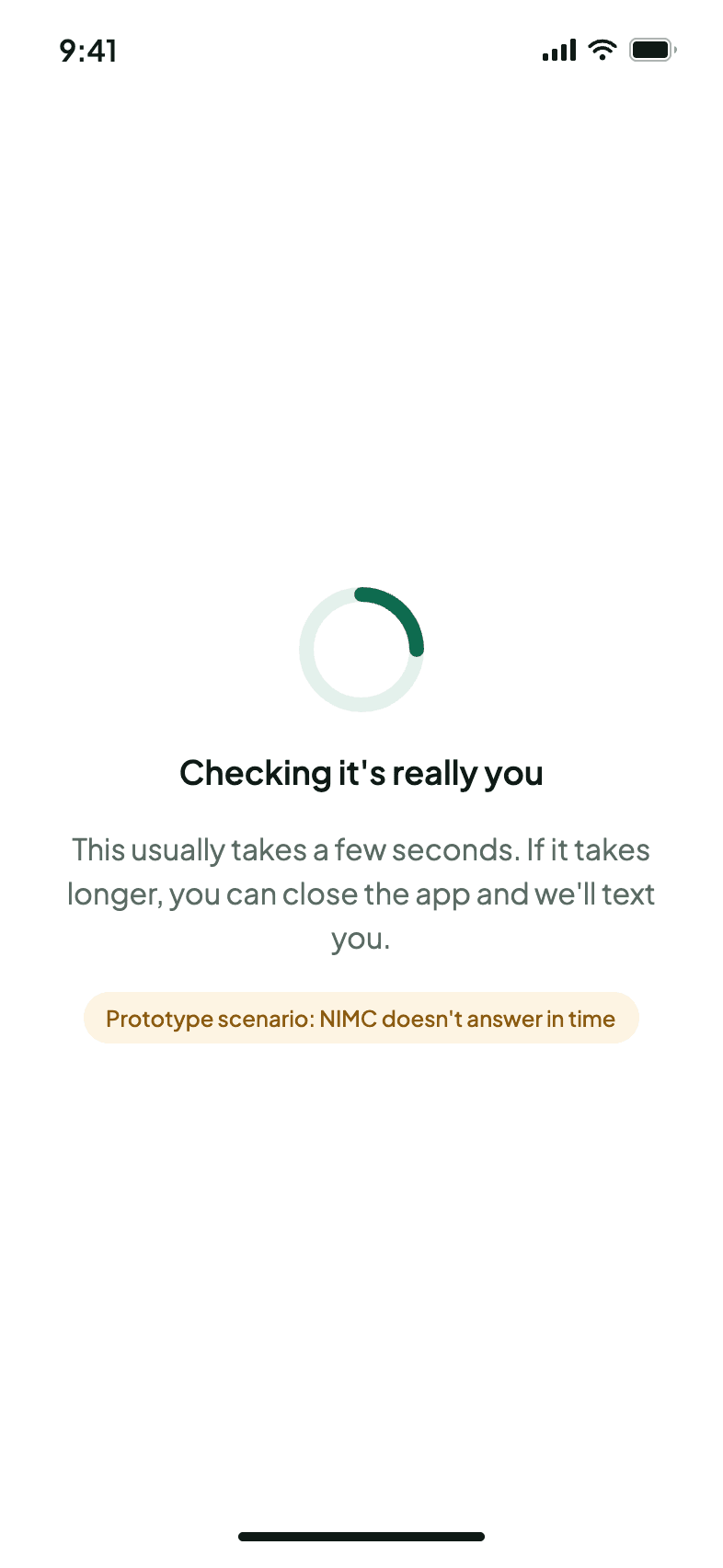
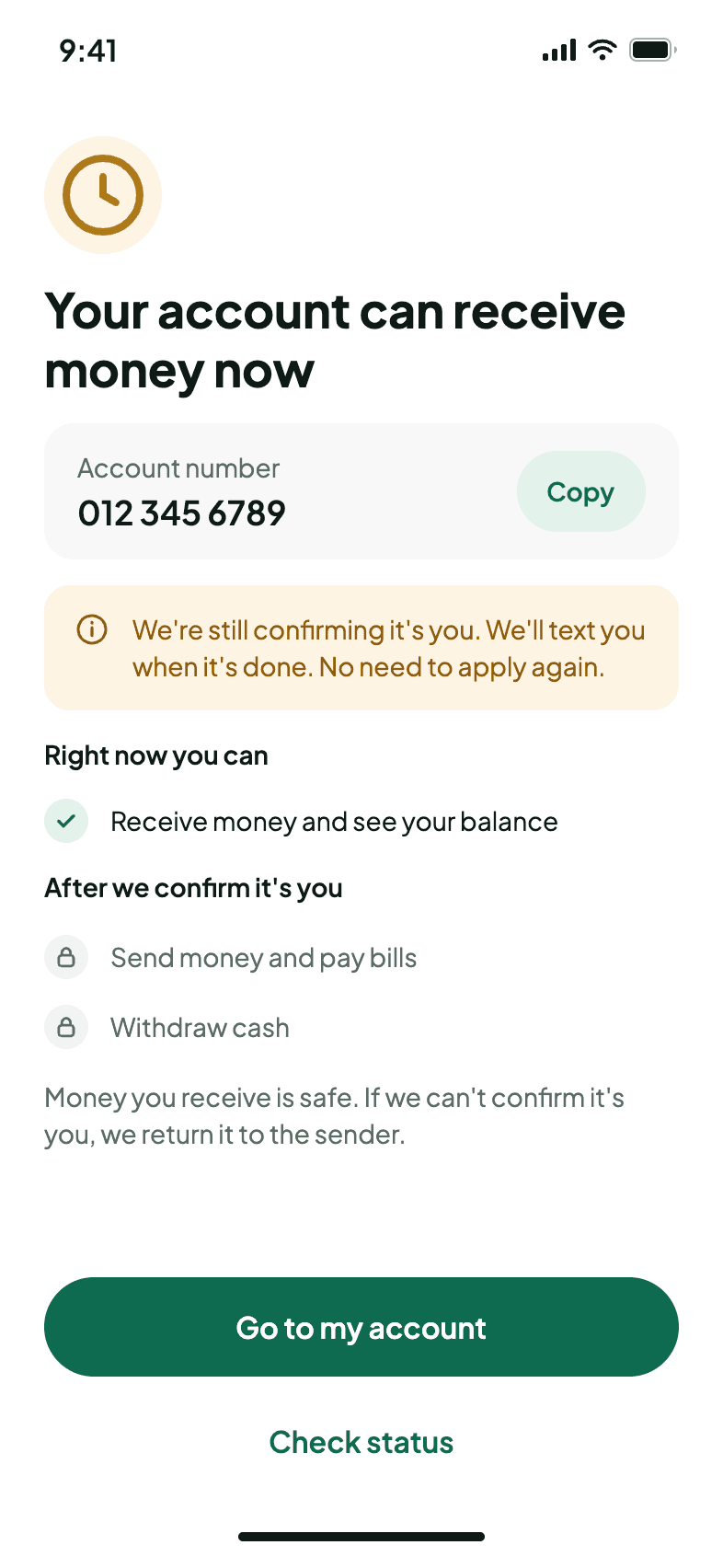
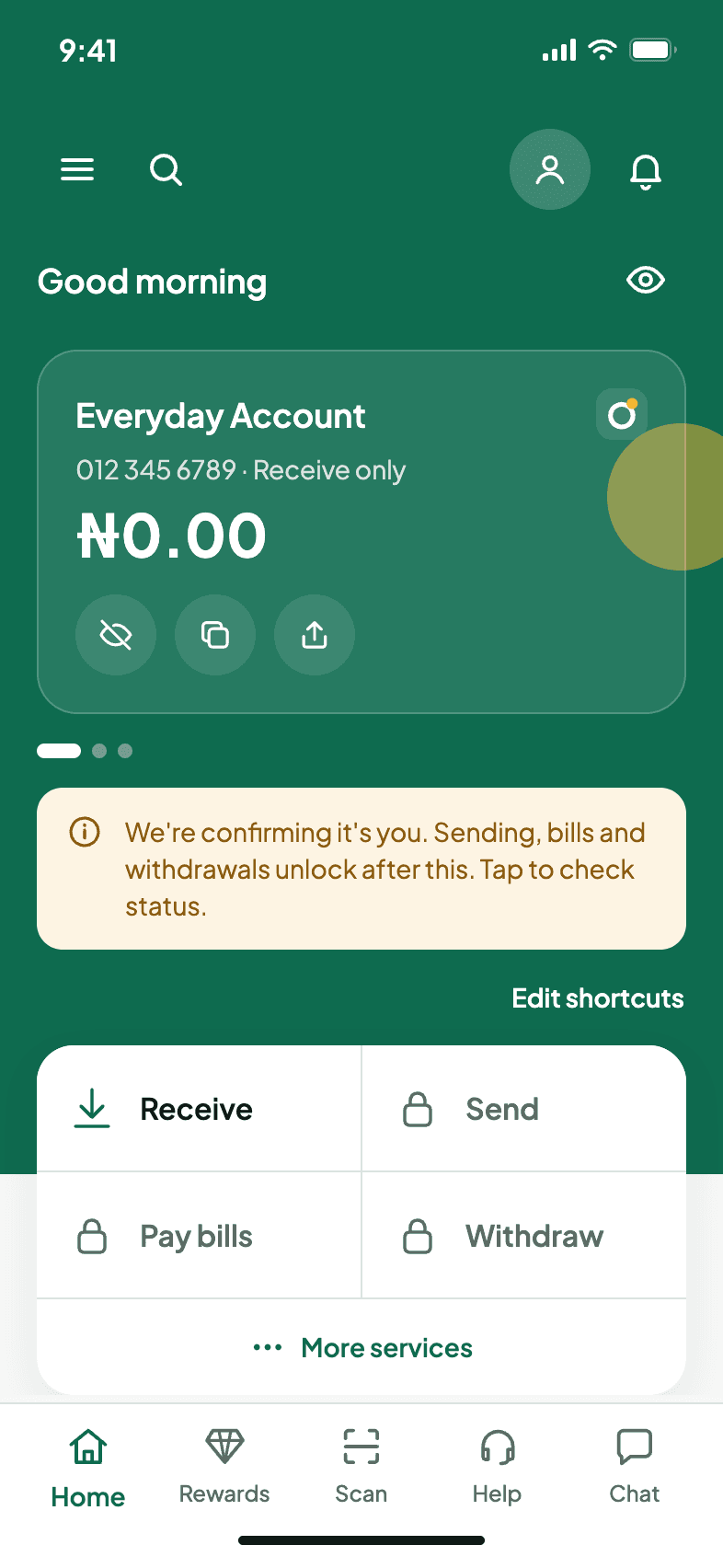
The prototype plays the main path: notice, one identifier, date of birth, selfie consent, selfie, checking, receive-only account, home. Closa is the brand name used for this case study.
01My role across a service with many owners
I owned the end-to-end service design: customer journeys in every channel, account states, the back-office recovery process and customer communications. I made the design artefacts myself and facilitated a working group with Product, engineering, the Data Protection Officer (DPO), compliance and KYC, customer operations and the contact centre.
- Reframed the brief from “fix the NIMC integration” to “design a service that works when verification is incomplete”.
- Set design principles that Product and the DPO both signed off.
- Made the decisions on identifiers, account states, recovery and communication, and gave each expert ownership of their number: compliance set limits, the DPO set retention, engineering set the retry rate.
02A gate that could only say yes or no
Customers could open an account with either their NIN or their Bank Verification Number (BVN), because the two are linked. When NIMC was slow, NIN checks timed out and the applicant was rejected on the spot. On USSD, the session closed before NIMC answered, so people had to dial again and start from the beginning.
The customers hit hardest were the ones the service existed for. Many more unbanked adults had a NIN than a BVN, so NIN failures fell hardest on them.
One synchronous dependency
The journey waited on a live NIMC call. Slow meant rejected.
No pending state
Nothing existed between verified and rejected, so delays looked permanent.
Linked records out of step
Stale or mismatched records were treated as fraud signals.
No recovery path
Failed applications were dropped, not queued, so operations couldn't help.
One language, no follow-up
An English error screen or a dropped USSD session, then silence.
03Who we designed for
Four customer groups and two operator roles needed different things from the same verification step. These proto-personas come from the research synthesis; names are illustrative.
Feature phone · NIN only
Hauwa, 34, Kano
Sells food from home and keeps cash in a tin. Has never had a bank account. Speaks Hausa and reads very little.
Needs
- Hausa first, with Listen on every step
- A USSD flow short enough to finish in one session
- Sending unlocked at a nearby agent, not a branch
Low-cost Android · NIN only
Tunde, 22, Ibadan
Delivery rider whose employer wants to pay him into an account. Patchy signal, little data, unsure why the app wants a selfie.
Needs
- The selfie explained before the camera opens
- An account that can receive wages while NIMC is slow
- Saved progress, so lost signal never means a restart
iPhone · Has a BVN
Chiamaka, 29, Lagos
Already banked, wants a second account for her side business. Dislikes long forms and repeating details banks already hold.
Needs
- BVN alone, with a code to the phone linked to it
- A clear route to higher limits straight after confirmation
- Fingerprint login during setup
Shared feature phone · NIN only
Mama Bisi, 58, Abeokuta
Cloth trader. The whole household uses her phone and her granddaughter reads her texts to her.
Needs
- No names in texts, and “Closa will never ask for your PIN”
- A PIN before anything account-specific
- Listen in Yorùbá, so nobody has to read for her
Operator · Closa agent
Emeka, 41, Onitsha
Runs a phone shop. Customers come to him to cash in, cash out and unlock sending. Wants to avoid being blamed for fraud.
Needs
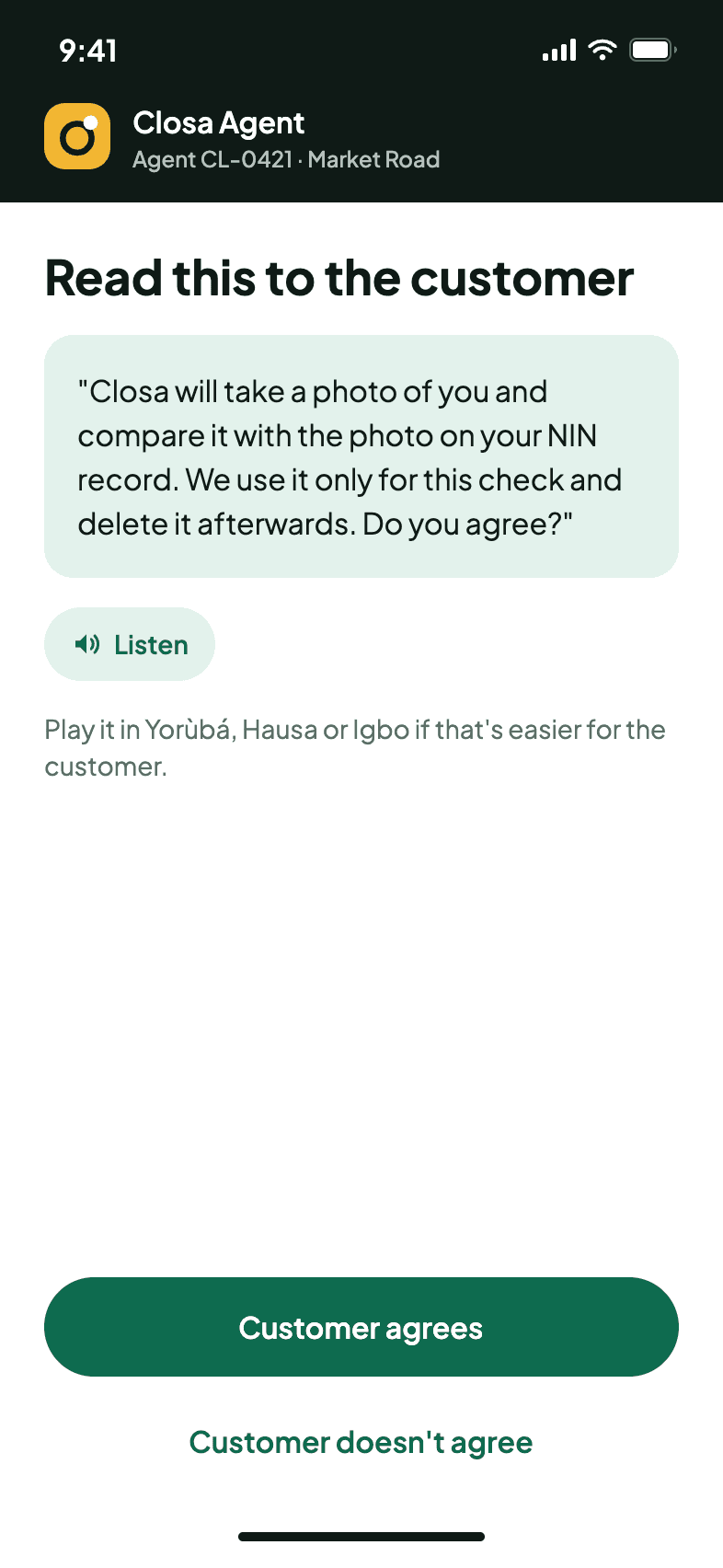
- A consent script with audio in three languages
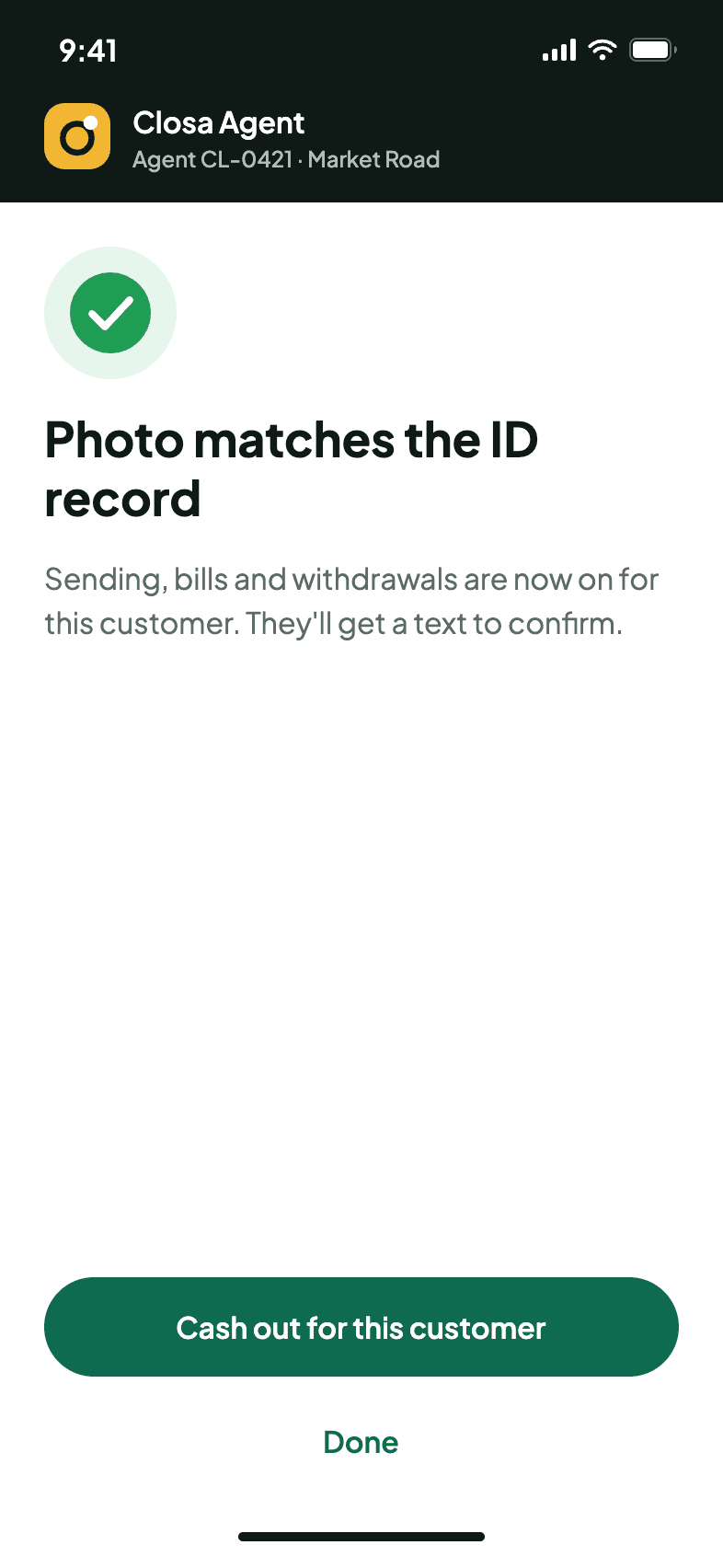
- Only match or no match, never the ID record
- Customer approval on the customer's own phone
Operator · KYC analyst
Funmi, 31, Lagos
Works the review queue for accounts the automatic checks couldn't confirm. Outages used to flood it.
Needs
- Retries that clear routine delays before they reach her
- The same status words customers and the contact centre see
- Every case closed as Confirmed or Not confirmed
04Mapping the service before designing screens
The current-state blueprint showed one point of failure with nobody responsible after it. The future-state blueprint below became the shared plan: front stage for customers, back stage for systems and people, and a human review only for exceptions.
Front stage · what customers see
- NIN or BVNApp or USSD, in the chosen language
- Prove it's youDate of birth, selfie or phone-line match
- Can receive nowLimits explained; texts in English, Yorùbá, Hausa and Igbo
- Full accountUnlocked automatically or at an agent
Line of visibility
Back stage · systems and people
- Live checkNIMC or NIBSS; slow is not a rejection
- Receive-only accountMoney in and held; nothing leaves
- Retry queueRate-limited, no duplicates
- Confirm and unlockOwnership evidence matched; KYC review for exceptions
Information architecture
One structure across four channels, using the same words everywhere, so customers hear the same thing in the app, on USSD, by text and from an agent.
App
- First open
- Intro · Welcome · Language
- Account opening
- Phone, code, notice, terms
- Prove it's you
- NIN or BVN
- Date of birth
- Selfie consent, then selfie
- Checking, then receive-only account
- PIN, notifications, fingerprint
- Account
- Home: Receive, Send, Pay bills, Withdraw
- Status · Confirmed · Raise your limits
- Not confirmed · Agent help
- Returning
- Log in · Reset PIN · New phone check
- Continue application
USSD
- Language, then main menu
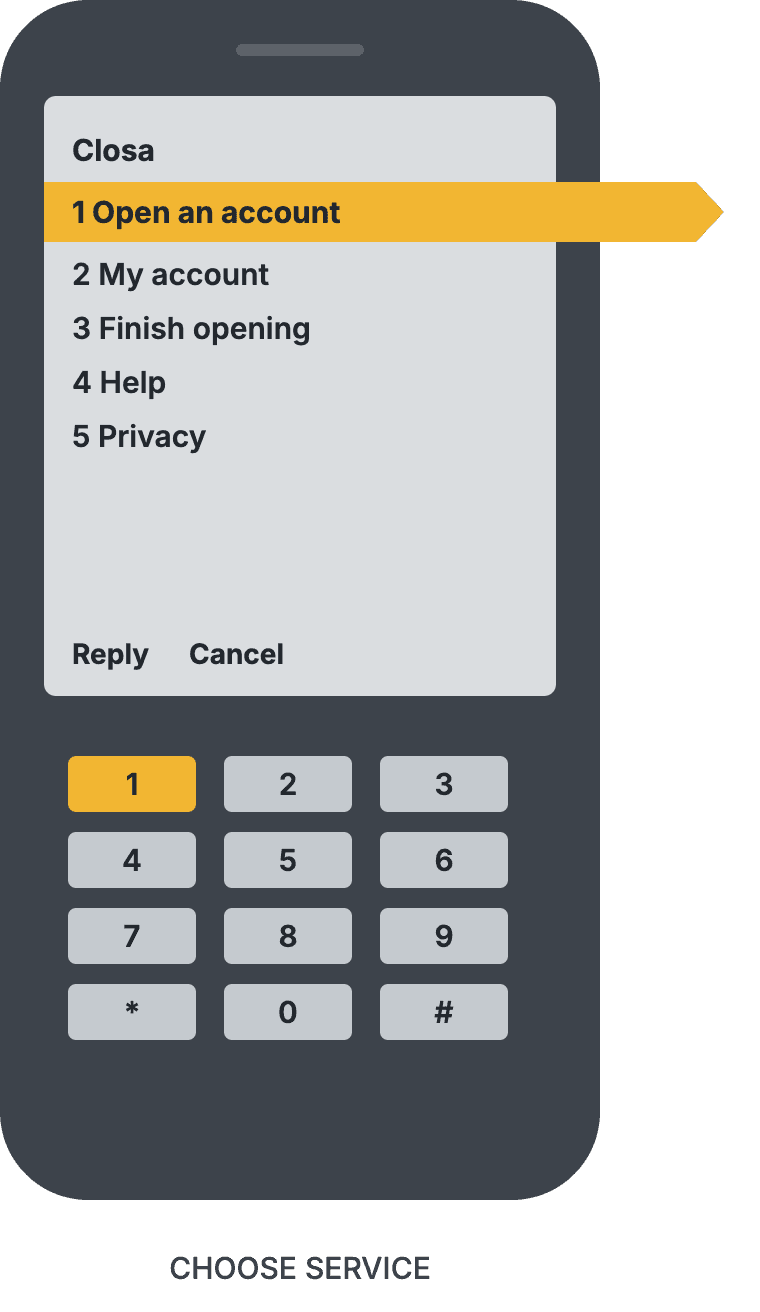
- 1 Open an account
- Notice, NIN or BVN, number
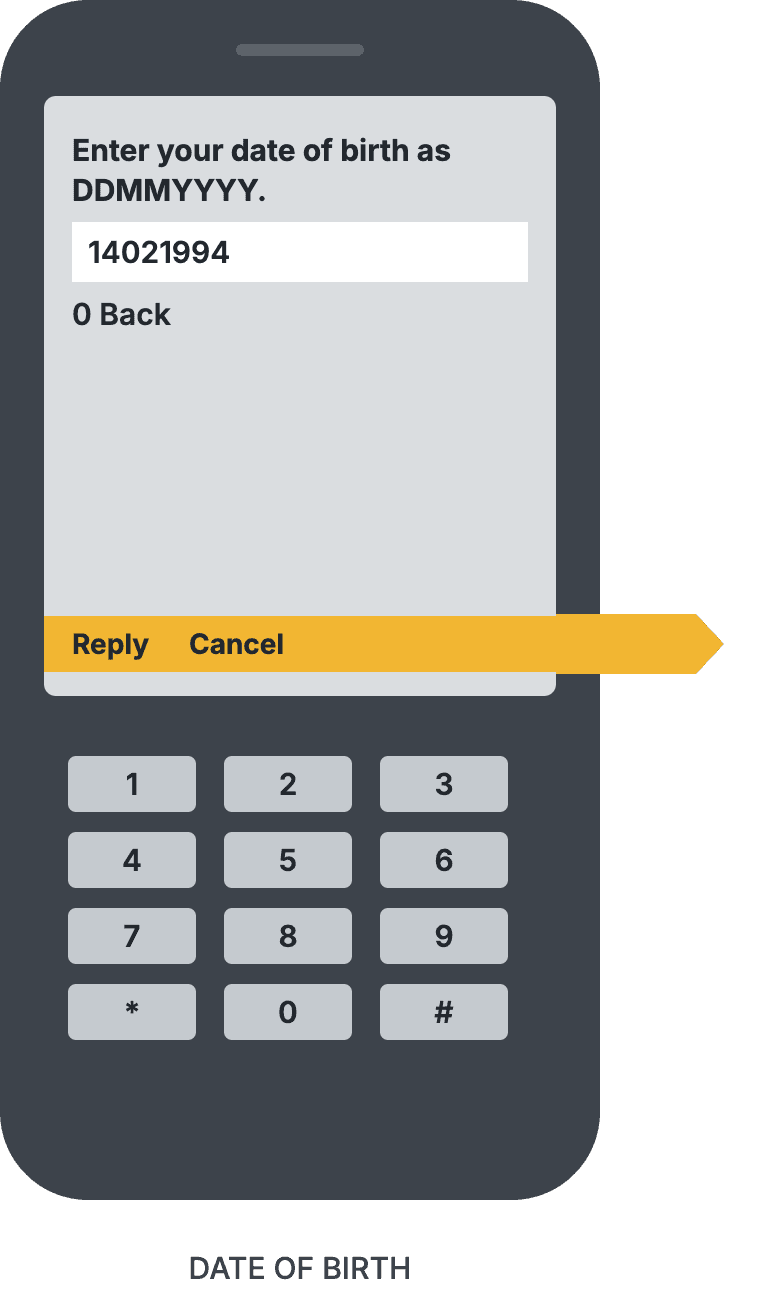
- Date of birth, create PIN
- Ends: receive-only account
- 2 My account (PIN)
- 3 Finish opening (PIN)
- 4 Help
- Find an agent · Call us
- 5 Privacy
- Text me the notice
- See or correct my details
- Contact our data officer
- 1 Open an account
Sessions expire after 5 minutes.
Agent app
- Agent home
- Check a customer's ID
- Customer phone number
- Consent script, read aloud
- Customer approves by USSD prompt and PIN, or text code
- Live photo: match or no match
- Cash in · Cash out · Daily caps
- Check a customer's ID
Text messages
- Triggered by account state
- Account can receive
- One step left (reminder)
- Confirmed, sending unlocked
- Not you? (new account or new phone)
- Triggered by the customer or an agent
- Agents near you
- Agent check code
No names in any text. Every text says Closa will never ask for your PIN.
Five rules the structure follows
- One identifier. The NIN or the BVN alone opens an account.
- Ask, never show. We check details against the ID record and never display it.
- PIN before account detail. Nothing account-specific appears until the PIN is entered.
- Same words everywhere. App, USSD, texts, agents and back office name each state the same way.
- Every state has an end. Each path finishes at receive-only, Confirmed or Not confirmed, with a next step.
05Choosing the approach: delay is not denial
I ran an options workshop where each route was scored on customer impact, regulatory risk, operational load and time to deliver. Steering everyone to BVN was the tempting quick win, but it would have helped people who were already banked and left out the unbanked customers the service was for.
| Option | Customer impact | Risk | Ops load | Outcome |
|---|---|---|---|---|
| Block until NIMC recovers | Everyone affected is lost | Low | Low | Rejected |
| Ask people to come back later | Most never return | Low | Low | Rejected |
| Manual checks for every failure | Days of waiting | Medium | Very high | Exceptions only |
| Steer everyone to BVN | Excludes most unbanked applicants | Low | Low | Partly: BVN goes to NIBSS |
| Receive-only account, ownership check, retries, then unlock | In today, can receive straight away | Controlled: nothing leaves until proven | Exceptions only | Chosen |
Design principles agreed by Product and the DPO
One number is enough
Ask for the NIN or the BVN, never both.
Delay is not denial
A slow check never rejects anyone, but nothing leaves until we know it's them.
Never wait inside a USSD session
Anything slow happens after the session ends.
Tell people, in their language
At every change of state, by app and text.
Ask, never show
Hold only what verification needs, and never display ID record data.
Recover by default
Machines retry; people handle what machines can't.
06Designing across app, USSD, text and agents
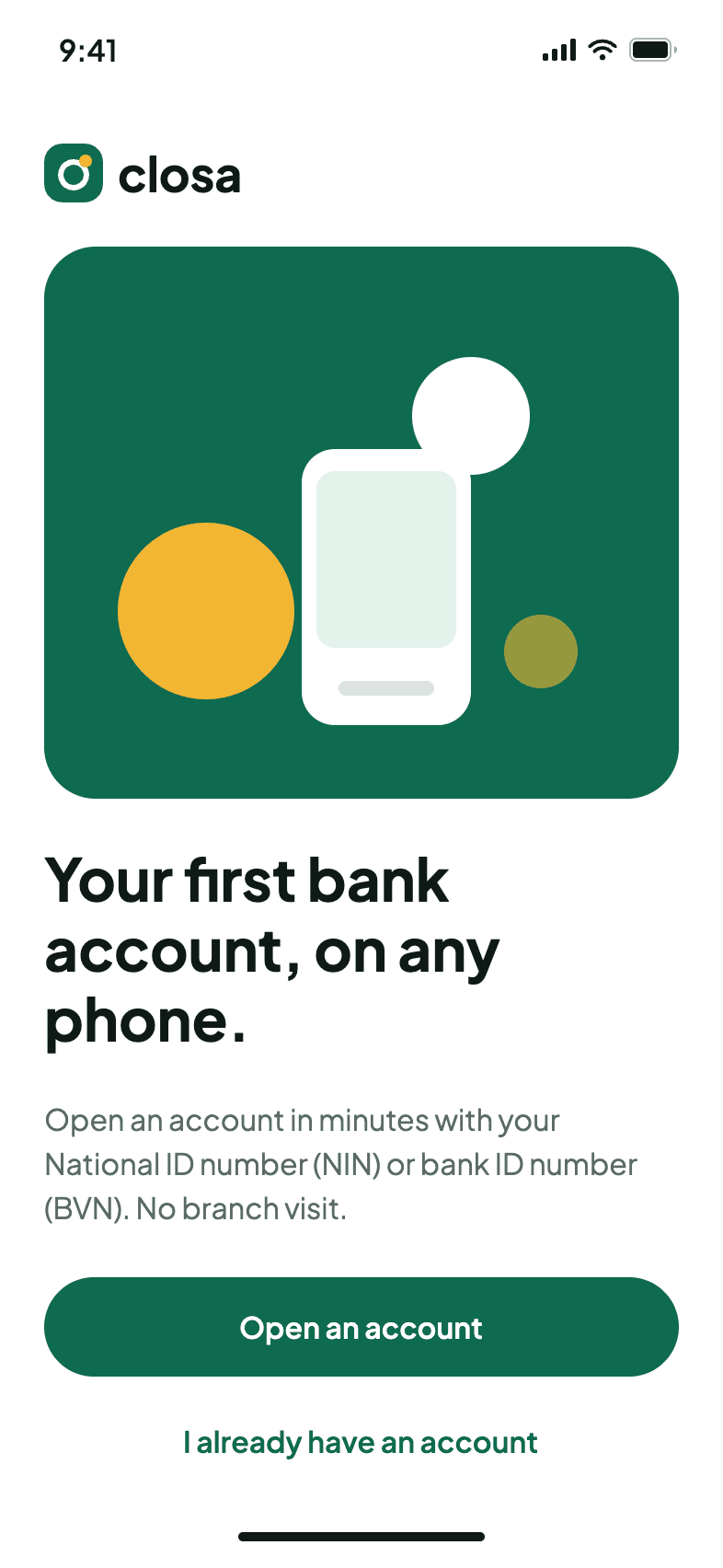
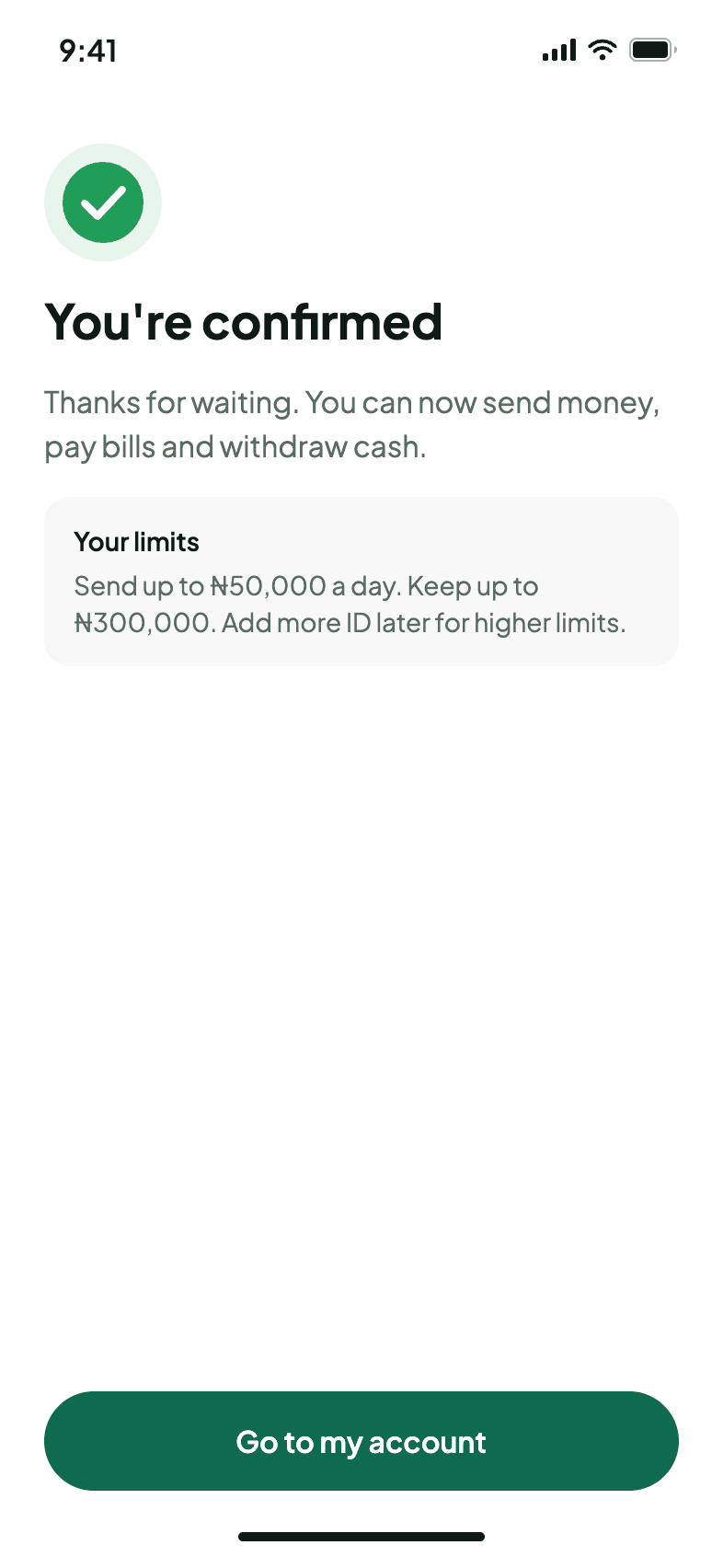
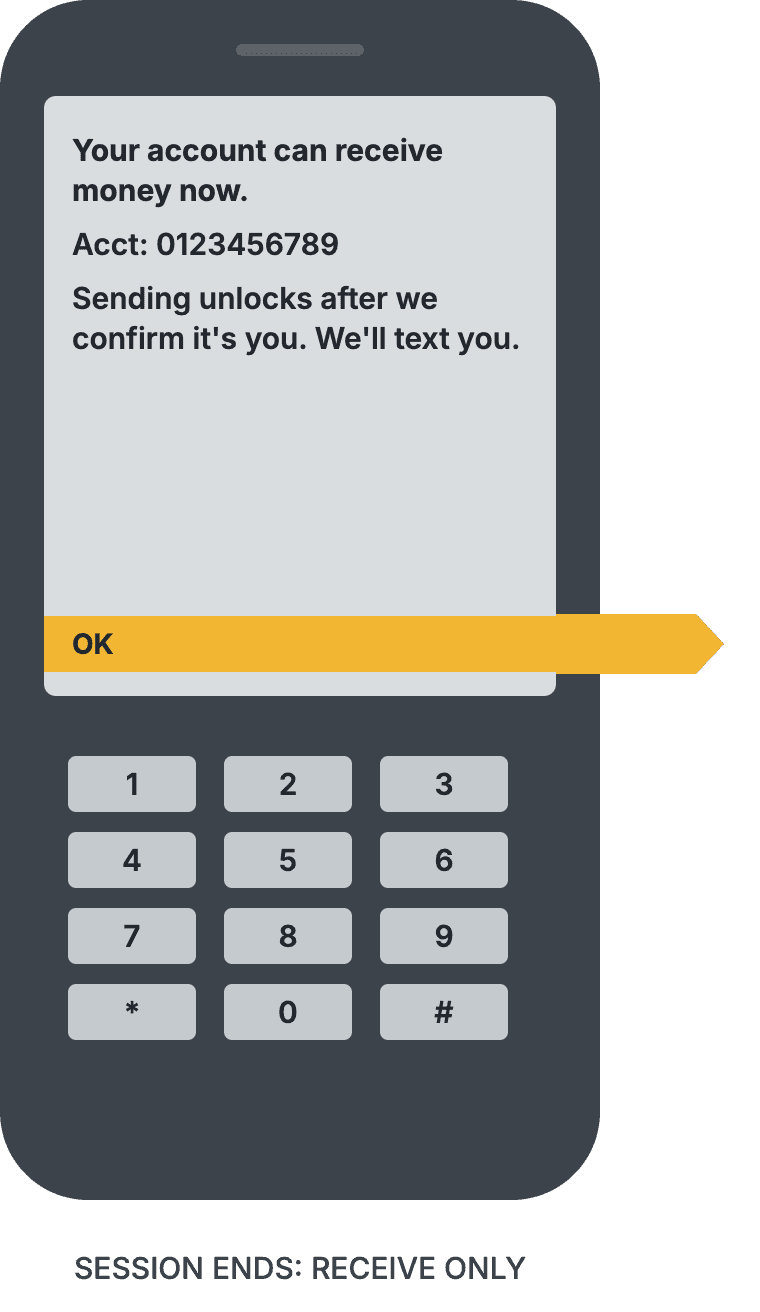
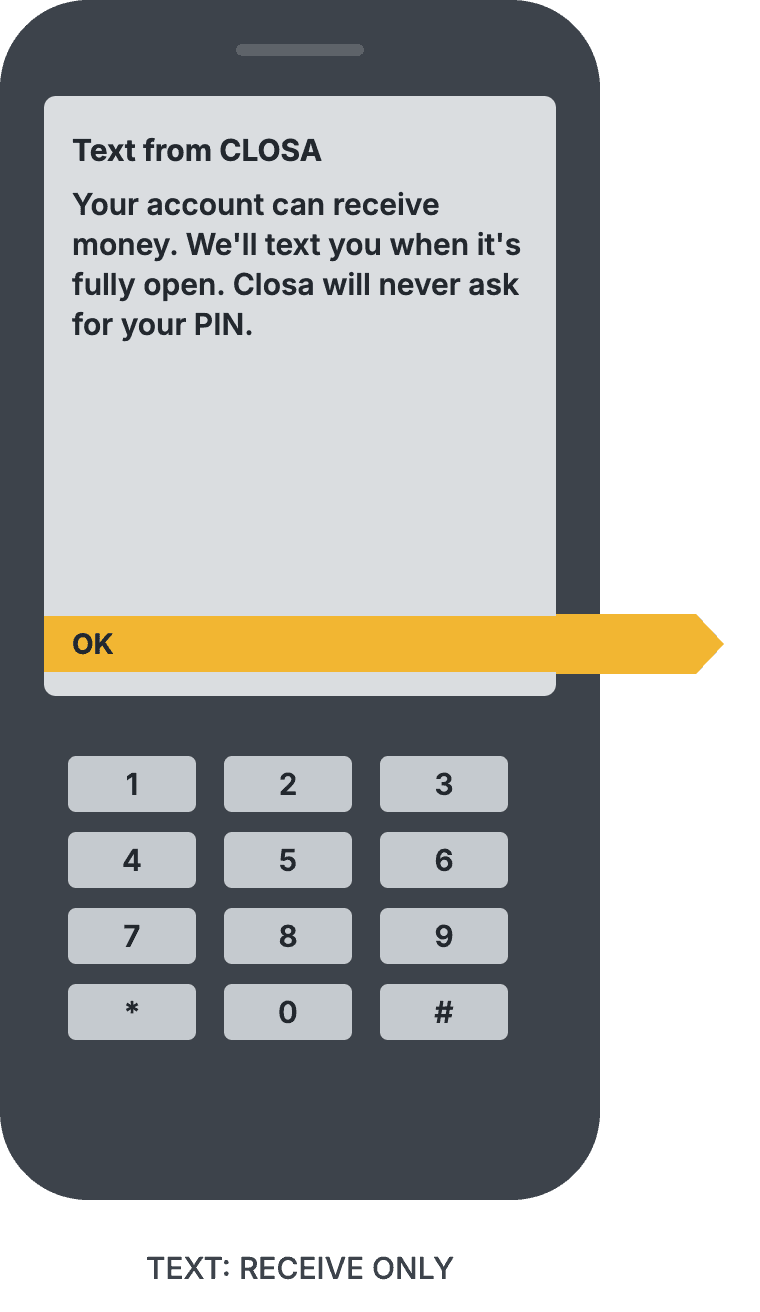
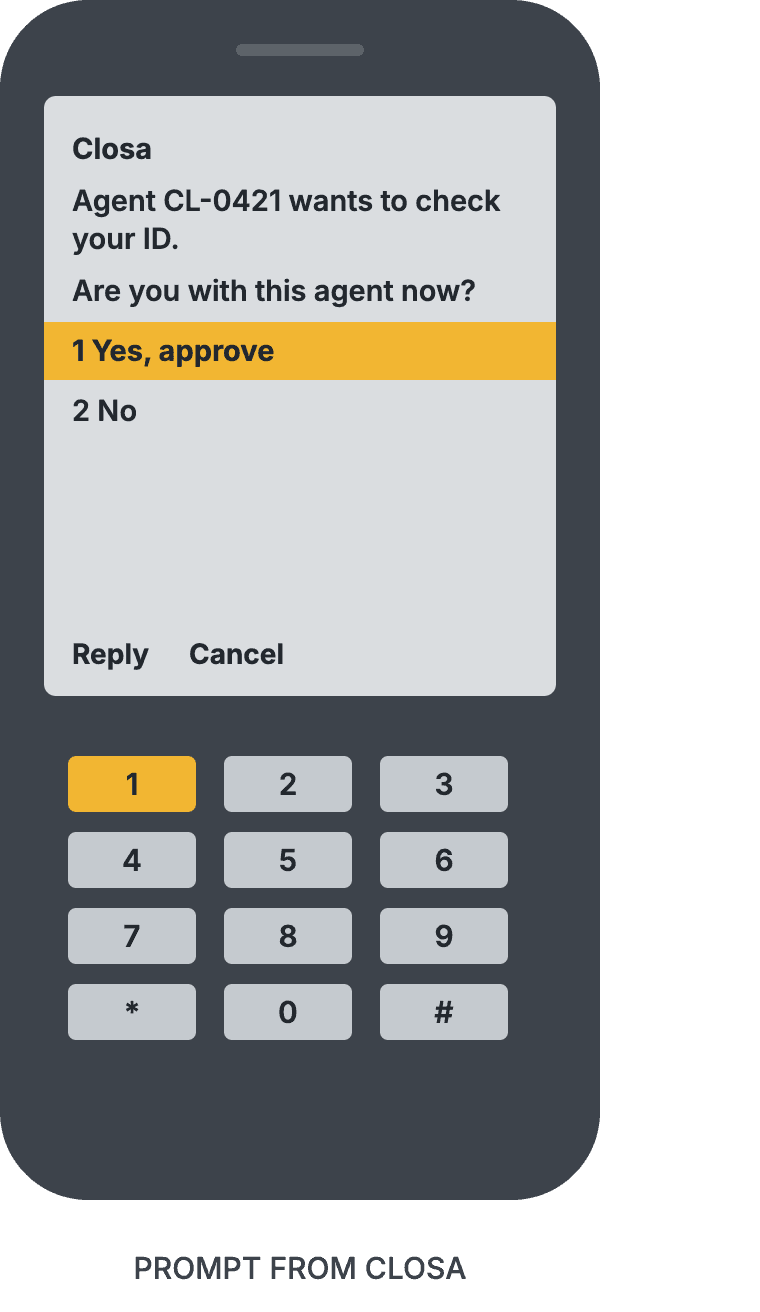
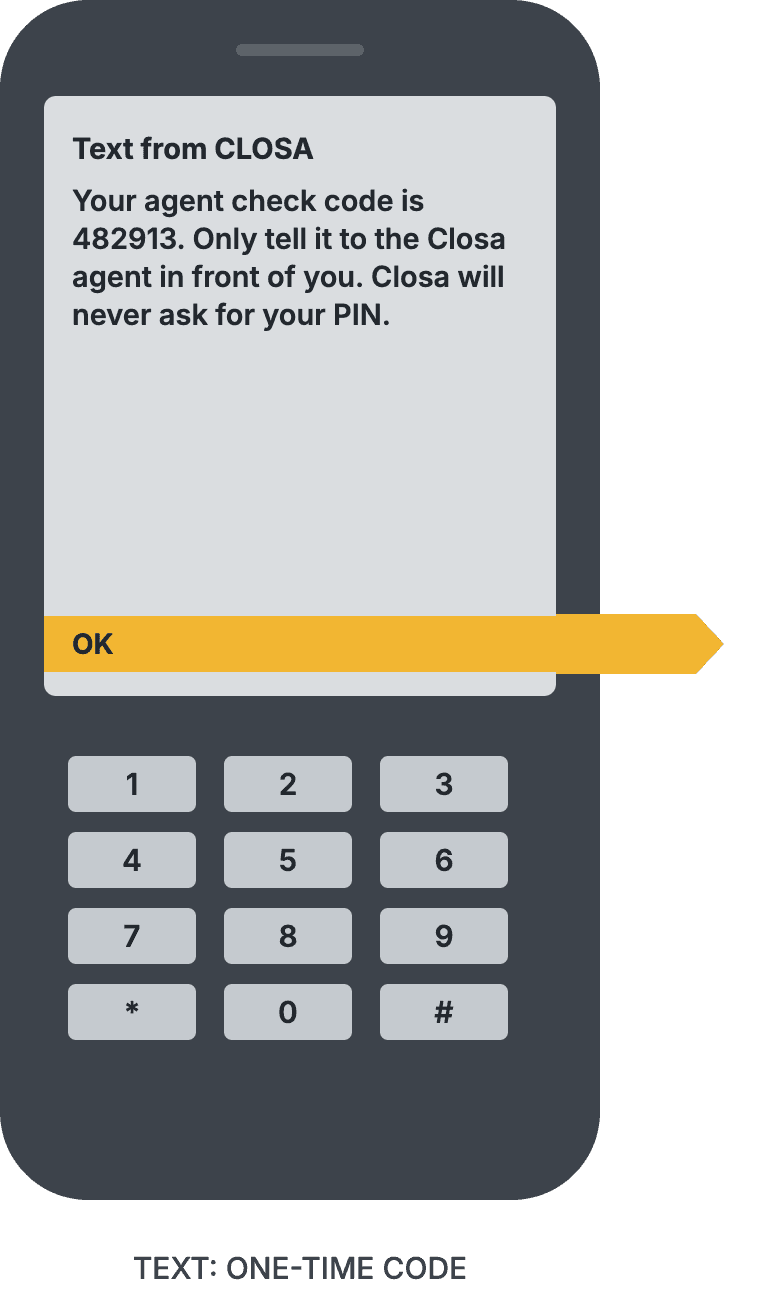
I designed and tested every channel myself, from low-fidelity wireframes to a clickable prototype in Figma. The screens below are exported from that prototype.
A few findings shaped the details. “Pending” read as “not open”, so the key screen leads with “Your account can receive money now”. In text messages, tone marks in Yorùbá, Hausa and Igbo switch the message to Unicode, which cuts the limit from 160 characters to 70. I wrote each English message well under that so the translations still fit in one text.
07Building in trust: fraud and privacy by design
Before handover I ran three structured critiques: fraud and identity assurance, data protection under the Nigeria Data Protection Act, and UX, content and accessibility. They found the first version proved a NIN existed, but not that the person typing it owned it.
| What the review found | What I changed |
|---|---|
| Anyone with someone else's NIN could open an account | Ownership evidence collected before any account opens, then confirmed in the background: phone line linked to the NIN, date of birth, and a consented selfie matched to the ID photo, or a code to the BVN phone |
| An unverified account could send money, enough for a mule account | Receive and hold until ownership is proven; money returns to senders if it never is |
| Screens showed names to whoever typed a NIN | Ask, never show, with one neutral message for no record, no match and too many tries |
| USSD status and fixes needed no PIN | PIN before anything account-specific; sessions expire after 5 minutes |
| No notice before collection | A short notice first, a full privacy notice, and a privacy menu on USSD |
| Feature phones can't take a selfie | An agent check: the customer approves on their own phone, the agent takes a live photo and sees only match or no match |
08Results for customers, the organisation and operations
Customers
Most people could open and use an account in one session, on a smartphone or a feature phone, with the ID they already had, even while NIMC was unstable.
Financial inclusion
NIN-only applicants, mostly unbanked, were no longer the people most likely to be turned away.
The organisation
Fewer repeat applications and duplicate checks, and a documented pattern for any identity-provider outage.
Operations
Analysts worked a queue of genuine exceptions; contact-centre staff could see each customer's status.
Part of the improvement came from NIMC stabilising; a staged rollout with a holdout would have isolated the design's share.
Names, account numbers and codes in the screens are demo data. Screens are exported from the Figma prototype, and personas were written for this case study under the name Closa. Limits and agent rules reflect CBN tiered KYC guidance at the time and should be checked against current rules.
09What I took forward
What I learned
- Failure states are part of the service. Any dependency on a third party needs a designed degraded state.
- Inclusion means checking who a failure hits: splitting the data by identifier showed it.
- Regulation is a design input. Mapping each data item to its purpose made the DPO a co-designer.
- Language work is design work, down to the character count of a text.
What I would do differently
- Ask “what if NIMC is down?” in every blueprint at discovery.
- Bring in fraud, compliance and the DPO from the first blueprint, not at review.
- Test with more speakers from more regions, and explore voice for low literacy.
- Measure each change on its own with a holdout group.